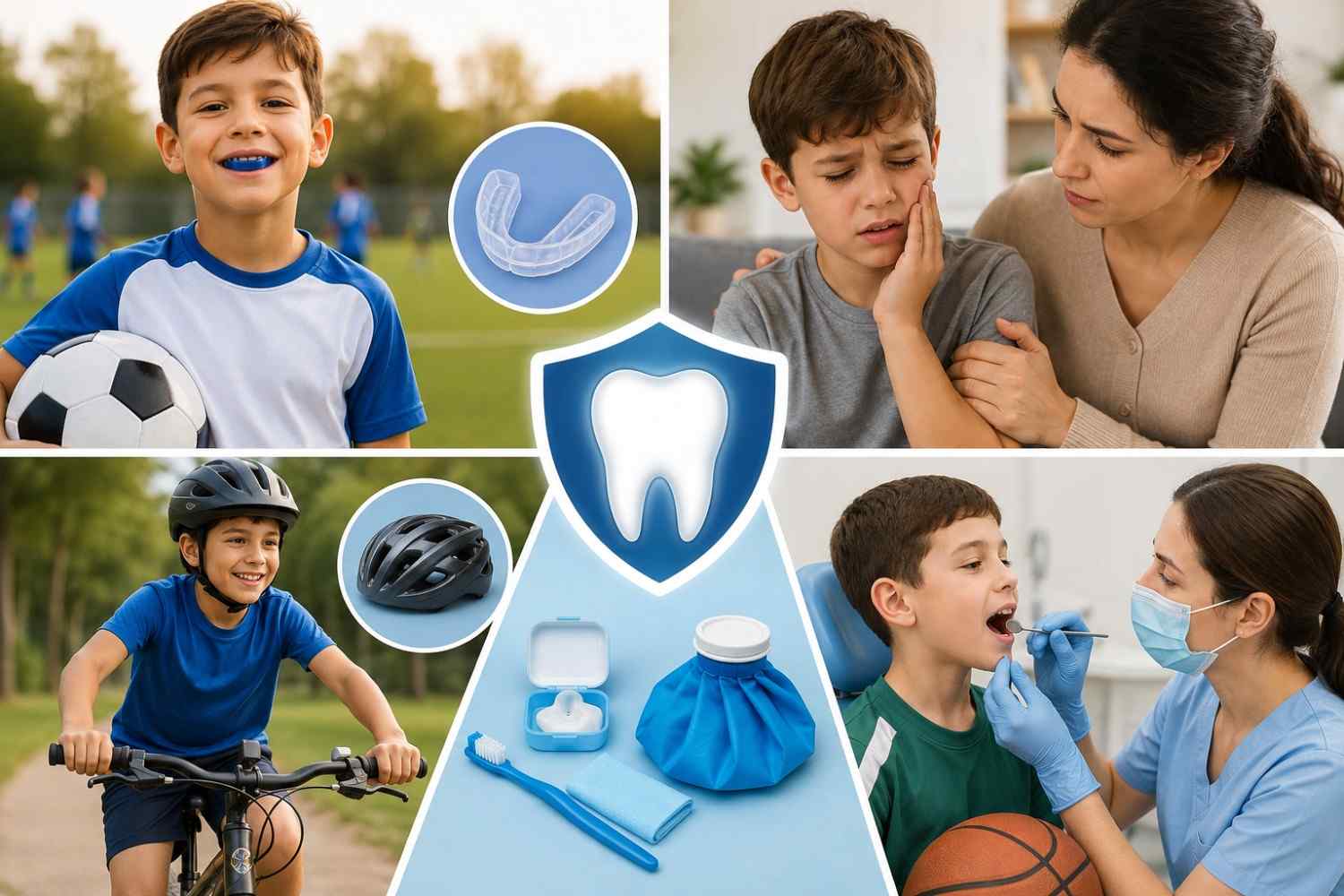
Playing sports helps kids stay active and healthy and build teamwork skills. However, sports like soccer, basketball, and hockey can sometimes lead to dental injuries.
Without proper protection, children may chip, crack, or even lose a tooth during a game or practice. Wearing a mouthguard can help protect their teeth and reduce the risk of injury.
Knowing how to get quick pediatric emergency dentistry in Tysons helps you handle these scary situations without panicking. Managing a sports dental emergency takes a clear plan and the right safety habits.
Let us look at the best ways to protect your child’s teeth on the field and handle injuries quickly if they happen.
What to Do for a Completely Knocked-Out Tooth
If an adult tooth is knocked out during a game, acting quickly within 30 minutes determines whether the tooth can be saved.
While you get ready to head to a dental office for pediatric dentistry near you, follow these exact steps to keep the tooth root alive:
- Hold by the Top Only: Pick up the tooth by the top chewing part and never touch the wet root area.
- Rinse Gently without Scrubbing: If the tooth is dirty, rinse it for two seconds under cold water or milk, but do not wipe it.
- Keep the Tooth Wet: Try to gently slip the tooth back into its socket if you cannot, put it in a small cup of cold milk.
- Go to the Dentist Immediately: Get to a professional right away to give them the best chance of saving the tooth.
How to Handle Chips, Cracks, and Cuts
- Save Broken Pieces: Gather any tooth pieces you find on the ground because a professional might be able to glue them back on.
- Clean the Mouth: Have your child rinse with warm water to clear away dirt, grass, and blood.
- Keep Swelling Down: Place a cold cloth or an ice pack wrapped in a towel against the outer lip or cheek to ease the pain.
- Check for Internal Damage: Scheduling a visit with a pediatric dentist near Vienna helps determine whether the inner nerve is damaged, which can prevent serious infections.
- Stop the Bleeding: Press firmly with clean gauze on any bleeding cuts inside the lips, tongue, or cheeks.
Comparing the Safety of Different Kids’ Mouthguards
| Feature | Custom-Fit Professional Guard | Retail Boil-and-Bite Guard | Standard Stock Guard |
| How It Fits | Made exactly for your child’s teeth; stays in place | Molded at home using hot water; can slide around | Loose and bulky; child must bite down to hold it |
| Talking and Breathing | Allows clear talking and easy breathing | Hard to talk clearly; blocks heavy breathing | Makes speaking very hard; blocks the throat |
| Protection Level | Maximum safety for teeth and jaw joints | Basic, uneven safety across the mouth | Very low safety; thin material wears out fast |
| How Long It Lasts | Lasts a full sports season or school year | Wears down or gets chewed through quickly | Breaks down fast; needs to be replaced often |
Ways to Prevent Injury in Youth Sports
Using the right safety gear significantly reduces the risk of dental injuries in kids’ sports.
- Wear It Every Time: Make sure your child wears their mouthguard during every single practice and game, not just at big tournaments.
- Use Helmets with Cages: For high-impact sports like hockey or baseball, use helmets that have full wire cages or clear face shields.
- Guards for Braces: If your child wears braces, use a special mouthguard that stops the metal brackets from cutting their lips during a hit.
- Upgrade the Gear Often: Replace old mouthguards every six months because a child’s growing jaw will change how the guard fits.
Protect Your Young Athlete’s Smile with Expert Care
Managing sports injuries takes a team that can give you fast, reliable, and gentle emergency care when every minute counts.
At Island Children’s Dentistry & Orthodontics, our friendly team is fully ready to handle unexpected accidents and protect your child’s smile.
We keep a calm, happy environment designed to make your child feel safe and relaxed during stressful times.
Your family deserves expert help to keep those growing smiles safe and healthy on the field. Call our office right now to schedule an appointment, reach out today, and let us help you get started!
FAQs
What should I do if a baby tooth is knocked out instead of an adult tooth?
You should never try to push a baby tooth back into the socket, as this can damage the permanent adult tooth growing underneath. Keep the area clean, and see a professional to ensure no broken pieces are left in the gums.
Can a tooth be saved if it turns dark gray a few days after a sports hit?
A dark gray or purple color means the tooth was bruised or the impact hurt the inner nerve. You need a digital X-ray right away so the dental team can evaluate the root and determine whether treatment is needed to save the tooth.
How do I safely clean and store my child’s sports mouthguard?
Rinse the guard with cool water and soap after each use, but avoid hot water, as it can melt the custom shape. Always store it in a plastic case with air holes to stop bacteria and mold from growing between games.
Why is storing a knocked-out tooth in regular tap water a bad idea?
Tap water has chemicals and lacks the right balance, which causes the delicate root cells of the tooth to swell and die quickly. Cold milk or a special saltwater solution keeps the cells alive much better.